Did I hear someone ask, ‘What’s an idiom?’ Well, they’re popular phrases we all say to convey a specific meaning. Have you ever thought about where all these sayings came from and how we got set on using them? If you’re anything like me, you may combine the two together and use them wholeheartedly incorrectly, which can be funny, and sometimes better. Like my most recent gaffe, “you’re really going to die on that horse.” I knew I messed up immediately, but I like it better and shall now use it any chance I get.
Let’s take a look at some of the stories behind the most popular idioms and maybe even a few forgotten gems worth bringing back from the beyond.
Military and Medical Origins
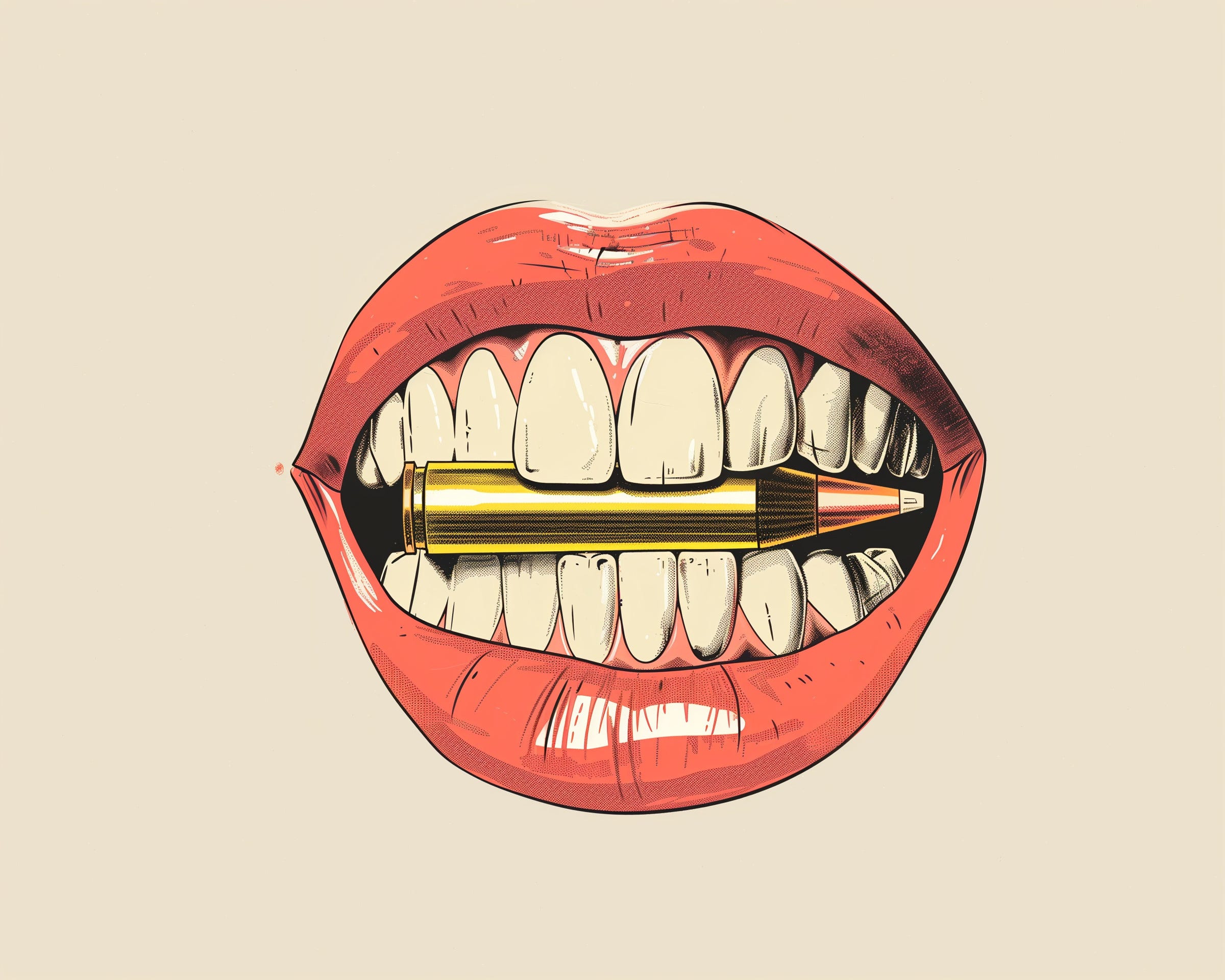
Bite the Bullet
The phrase "bite the bullet" comes from battlefield medicine in the 1800s. Before anesthesia, doctors gave wounded soldiers bullets to bite on during painful surgeries, yickes! Today, we use it to talk about facing tough situations head on.
Turn a Blind Eye
This phrase links back to British Admiral Horatio Nelson. During the 1801 Battle of Copenhagen, he used his blind eye to look through his telescope, pretending not to see a signal to retreat. The phrase now means to ignore something on purpose.
Caught Between a Rock and a Hard Place
This phrase likely has military roots, referring to soldiers who faced tough decisions in combat. It means being stuck in a difficult situation with no easy way out.
The Whole Nine Yards
This idiom is believed to originate from World War II, where a nine-yard length of ammunition belt was used in fighter planes. It means going all out or giving everything you’ve got to achieve a goal.
To the Bitter End
This phrase comes from naval warfare, where ships would fight until their last breath. It means to continue fighting until the very end, regardless of the outcome.
A Shot in the Arm
This idiom originates from medical practices, referring to receiving an injection that revitalizes someone. It now means a boost or encouragement in a difficult situation.
On the Front Lines
This phrase may be self-explanatory, but it refers to soldiers who fight directly in battle. It means being in the midst of action or dealing with critical issues firsthand.
Going AWOL
This term turned idiom comes from military language, meaning "absent without leave." Signifying someone has abandoned their duties or responsibilities without permission. It means someone has intentionally gone missing.
Playing with Fire
I’m sure your mom may have said this to you at some point in your life. This idiom suggests taking unnecessary risks, and it may trace back to soldiers who dealt with explosive materials or fire in battle. It means engaging in dangerous behavior that could lead to problems.
Sacred Cow
This idiom may not be super well known, but it refers to something that is beyond criticism or questioning. It comes from the British East India Company, where cows were sacred and could not be harmed. It highlights the idea of holding certain beliefs or practices in high regard.
From Ancient Times
Spill the Beans
Ancient Greeks used beans for voting. White beans meant yes, black beans meant no. If someone knocked over the container, they would "spill the beans" and reveal the vote results before time. Now we use it when someone reveals a secret. Although “spill the tea” or “give me the tea” has been replacing this one for years. It may be phased out completely one day, and we will need to bring it back.
Rome Wasn't Built in a Day
This saying first appeared in French poems before 1200. It reminds us that great things take time to create and that we have been saying this for a very long time!
Barking Up the Wrong Tree
This idiom likely originates from hunting dogs that would bark at the bottom of a tree, thinking their prey was there when it was not. It now means to pursue a misguided course of action or to make a wrong assumption, like a woman hitting on a gay man, in a more recent example of its use.
Crossing the Rubicon
Now, I have never heard this one before my research, but apparently, this phrase comes from Julius Caesar’s crossing of the Rubicon River in 49 BC, which was a point of no return. Point of no return! Now that’s a good phrase, and it’s clear. “Crossing the Rubicon” means to take an irreversible step with significant consequences. A highbrow way of saying, point of no return.
Don’t Count Your Chickens Before They Hatch
Oldie, but goodie. This saying dates back to the fables of Aesop. It’s a warning not to assume success before it happens. Underscoring the unpredictability of outcomes.
The Writing on the Wall
Ooh ominous! This idiom originates from the Bible, the Book of Daniel, where mysterious writing appears predicting doom. It now indicates an impending disaster or a clear warning of future trouble.
Eat Crow
Personal favorite! This phrase likely comes from the harsh reality of eating crow as a punishment for being wrong. It means to admit one’s mistakes or accept humiliation after being proven wrong. I don’t know what it says about me that this is a personal favorite. Which brings me to my next favorite phrase…
Kick Rocks
Kick rocks is better than “take a hike,” “go pound sand,” and “make like a tree and leaf”, or as Biff in ‘Back to the Future’ would say, “make like a tree and leave.” All these sayings express a desire for someone to move it along, and ‘get gone.’ The origins of the phrase are unknown, but it probably relates to the literal act of kicking rocks while walking, implying an aimless or worthless action.
Killing Two Birds with One Stone
This idiom refers to accomplishing two tasks with a single effort. Its exact origin is uncertain, but it emphasizes the efficiency in achieving goals or accomplishing tasks. A very right brained idiom.
The Grass Is Always Greener on the Other Side
Never happy. This saying suggests that people often perceive others' situations as better than their own. It likely comes from the idea that distant pastures appear greener and more appealing.
Throwing Down the Gauntlet
Let’s do it! This phrase comes from medieval jousting, where a knight would throw down his gauntlet to challenge another. It means to issue a challenge or provoke someone to compete.
From Trade and Commerce
Baker's Dozen
In 1262, bakers faced strict rules about bread weight. To avoid punishment for selling light loaves, they would give 13 instead of 12. The extra loaf protected them from accusations of cheating customers. The nerve.
By Hook or by Crook
Medieval peasants could collect firewood using either a shepherd's crook or a bill-hook. This was one of their few legal rights, and the phrase came to mean achieving something by any allowed method.
Cutting Corners
This phrase likely comes from the mid-19th century when horse-drawn carriages would travel across the corner of a street or road instead of following the designated path, cutting the corner. This was risky business, as they could be overturned. Now it means the act of cutting corners in construction to save time and money, often at the expense of quality. To do something in the easiest or cheapest way, compromising all standards.
Don’t ‘Bite the Hand That Feeds You’
Dictionary.com says the phrase was first used, “about 600 b.c. by the Greek poet Sappho, this metaphor of a dog biting its master was first recorded in English in 1711.” This idiom is more of a phrase you say when giving someone advice. It means harming someone who is there for you or provides for you. Not a smart move, ever, so don’t.
Money Doesn't Grow on Trees
Don’t we all wish it did! The origin of this saying is unclear, but it stresses the value of money and hard work, serving as a reminder that financial resources are limited and must be earned. J’s Tree Trimming and Removal had this to say about when the phrase made its first appearance in writing, “emerging in writing near the end of the 19th century. For example, the Statesville Landmark newspaper from 1891, reads: ‘Money doesn't grow on trees here yet.’”
Foot the Bill
This phrase means to pay for something, particularly expenses one did not expect. An early 1800s phrase that comes from the practice of tallying up a bill by writing it out on ledger paper, "footing" the total at the bottom.
On the Same Page
This idiom reflects the weight of agreement in business or relationships. It suggests that all parties should understand and agree on a topic or plan to avoid confusion before moving forward. To ensure everyone has the same amount of information. While some people believe the idiom 'on the same page' comes from choral singing, where everyone must follow the same music sheet, it is more plausible that it originates from educational and business assemblies. In these settings, participants use identical copies of a document and must reference the same page to comprehend the discussion.
Call It a Day
This phrase is often used to indicate stopping work for the day. The not-so-flowy original expression was ‘call it half a day,’ first chronicled in 1838, according to the dictionary, “which referred to leaving one's place of employment before the work day was over. The first recorded use of call it a day was in 1919, and of call it a night in 1938.”
In the Red
This financial term refers to being in debt. It comes from the practice of using red ink to indicate negative balances in bookkeeping.
Cash Cow
This idiom describes a business or product that generates a steady income with little effort. The term likely originates from dairy farming, where cows consistently provide milk. Although I doubt it’s with little effort for the cows.
From Nautical Life
Under the Weather
Sailors who felt sick would go below deck to recover, getting away from bad weather. We still use this phrase when feeling ill.
Three Sheets to the Wind
This idiom describes someone who is drunk. It originates from sailing, where "sheets" refer to the ropes that control the sails. If the sheets are loose, the sails flap wildly, leading to an unstable ship.
All Hands on Deck
This phrase originates from the need for every crew member to be present on deck during emergencies. It now means that everyone’s help is needed in a given situation.
Steer Clear
This idiom comes from the practice of navigating a ship safely around obstacles. It means to avoid someone or something.
Know the Ropes
This phrase refers to the extensive knowledge sailors needed to control the various ropes on a ship. It now means to understand how to do a particular job or task well.
Shipshape and Bristol Fashion
This expression means that something is in good order, tidy, or organized. It comes from the high standards of cleanliness and organization expected on ships. We just say “shipshape” now.
Sail Close to the Wind
This idiom refers to sailing a ship very close to the wind, risking danger. It means to take risks or act in a way that approaches the limit of what is acceptable.
Plain Sailing
This phrase indicates an easy, straightforward task. It comes from the idea that sailing in open waters is easier than navigating through obstacles.
From Popular Daily Life
Burn the Midnight Oil
From the pre-electricity era, naturally. Before electric lights, people worked by the light of oil lamps. The first use of "burn the midnight oil" is found in Francis Quarles' EMBLEMS, published in 1635, according to Fiction Predilection. The phrase means to stay up late working.
Hit the Books
A direct reference to studying, this phrase captures the physical action of opening books to learn. The saying "hit the books" likely originated in the mid-20th century and refers to the act of beginning to study seriously. An American English slang expression, its exact origin is unclear; it's believed to be related to an earlier idiom like "hit the trail," which implied starting a journey according to Ginger Software.
Beat a Dead Horse
This idiom was born from the age when it was considered acceptable to beat a horse to make it go faster. Beating a dead one, well, that’s pointless. The phrase means to continue discussing a topic that has already been resolved or to chase a point that is pointless. To waste your breath, your time, and your efforts. One early written example of the phrase is found in a London newspaper from 1859, according to Wikipedia, when an English politician compared his campaign results to “flogging a dead horse,” classic.
Die on This Hill
Originating from military strategy, according to the grammerist, “the hill you want to die on” is believed to have originated in the military context, signifying a battle, typically fought on a hill (the high ground being strategically advantageous), that a soldier is willing to die for due to its significant importance. This phrase suggests a willingness to defend a particular point of view or decision passionately, even if it leads to conflict. It emphasizes commitment, often in situations where others might disagree, you’re willing to metaphorically die or take others down with you for your stance. It can serve as a warning or a commitment gauge.
Break the Ice
This phrase’s first use was recorded as early as 1579. This idiom symbolizes the practice of ships breaking ice to allow others to pass through. Now, it means to initiate conversation in a social setting to ease tension.
Jump on the Bandwagon
The phrase originates from 1800s America, where a 'bandwagon' was a horse-drawn vehicle for musicians in circus parades. According to gingersoftware.com, in 1848, Dan Rice, a famous clown, used his bandwagon to transport politicians, attracting crowds with its music for campaign speeches. It means to join a popular activity or trend.
Not to be confused with "Falling off the water wagon," which I have done. This is an idiom that means resuming a bad habit after a period of self-restraint, referring to drinking alcohol after being sober, for example.
Let the Cat Out of the Bag
The phrase "let the cat out of the bag" likely originates from a market trick where sellers swapped a piglet with a less valuable animal, the cat. Buyers only realized the deception when they opened the bag, revealing the cat. It means to reveal a secret, often unintentionally.
The Ball is in Your Court
This phrase comes from tennis, where the ball must be returned to the opponent's side. It means that it is now someone else's turn to make a decision or take action.
Pulling Your Leg
This idiom likely has roots in street thieves who would pull a person's leg to distract them while robbing them. Now, it means to joke or tease someone. From robbery to comedy.
Cost an Arm and a Leg
This idiom means something is very expensive. You may have to give up a lot to afford it. The phrase "cost an arm and a leg" emerged in the United States around the mid-20th century. Though its precise origin is unclear, some believe it might have originated from the concept of paying a substantial price, possibly linked to art and portraits, paintings with missing limbs were less valuable than those that were fully intact. Also, possibly from the expensive medical bills associated with severe injuries, such as losing a limb. Another theory, mentioned by Dictionary.com, ties it to an older American criminal slang expression, "if it takes a leg," which conveys a sense of desperation.
When Pigs Fly
This idiom suggests that something will never happen. Pigs are not known for flying, making this phrase a humorous exaggeration. Origins unknown, but it was found in an English-Latin dictionary from 1616.
Caught Between a Rock and a Hard Place
Often associated with the Greek myth of Scylla and Charybdis. In Homer's Odyssey, Odysseus must navigate a narrow strait, choosing between the monster Scylla on a rock and the perilous whirlpool Charybdis, the hard place. This American origin is from mining, where miners often faced dangerous choices. The first documented instance of the phrase appears in the 1921 edition of Dialect Notes V, published by the American Dialect Society. In 1917, a funding shortage from a past banking crisis led to a conflict between copper mining companies and mineworkers in Bisbee, Arizona. Unionized workers demanded better wages and conditions, but when rejected, many were forced out to New Mexico. Today, the phrase means being stuck in a difficult situation with no easy way out.
Throw in the Towel
This saying comes from boxing in the early 1900s, when the trainer throws a towel into the boxing ring to concede defeat, raise the white flag if you will. It means to give up or admit defeat.
Put All Your Eggs in One Basket
This idiom warns against risking everything on a single venture. It suggests the importance of diversification. The phrase appears in the Spanish author Miguel de Cervantes’ novel, DON QUIXOTE, published in 1605.

Old Idioms Worth Bringing Back
"Got the Morbs" (Victorian Era)
Original meaning: Temporary sadness or melancholy.
Modern use: "I've got the morbs today - need some cheering up!"“Scuttlebutt” (Victorian Naval Era)
Original meaning: Gossip.
Modern use: "Martha is a big scuttlebutt, don’t tell her a thing!""Tickety-boo" (Victorian Era)
Original meaning: Everything is fine or in good order.
Modern use: "How's the new job going? Everything's tickety-boo!""Nanty Narking" (Victorian Era)
Original meaning: Having a great time.
Modern use: "We had a nanty narking time at the concert last night!""Gigglemug" (Victorian Era)
Original meaning: Someone who always smiles.
Modern use: "She's such a gigglemug - always brightens up the room!""Hue and Cry" (Medieval Era)
Original meaning: A public outcry used to catch criminals.
Modern use: "There was a real hue and cry when the store ran out of the new gaming console!""Penny for Your Thoughts" (Middle Ages)
Original meaning: Asking someone what they are thinking.
Modern use: "You seem quiet today. A penny for your thoughts?""Fiddlesticks!" (17th Century)
Original meaning: An expression of disbelief or annoyance.
Modern use: "Fiddlesticks! That can't be true!""Well, I'll Be!" (19th Century)
Original meaning: An expression of surprise.
Modern use: "Well, I'll be! I didn't expect to see you here!""The Devil is in the Details" (20th Century)
Original meaning: Small things can cause major problems.
Modern use: "Make sure to read the contract carefully. The devil is in the details.""Raining Cats and Dogs" (17th Century)
Original meaning: A heavy rainstorm.
Modern use: "Don't forget your umbrella; it's raining cats and dogs outside!"
When Idioms Are Used Incorrectly
People often misuse idioms, leading to humorous misunderstandings, or is it? Here are a couple of idioms gone wrong, but we liked it, like my ‘die on a horse’:
"Curiosity killed the cat, but satisfaction brought it back."
This mixed idiom can confuse listeners. The phrase "Curiosity killed the cat, but satisfaction brought it back" combines older sayings. "Curiosity killed the cat" originated from Ben Jonson's 1598 play, "Every Man in His Humour." The addition "but satisfaction brought it back" emphasizes that gaining knowledge can outweigh the risks of curiosity. It was used incorrectly at first, but then it became its own thing.
"We'll burn that bridge when we get to it."
This incorrect version mixes "burning bridges" with "crossing that bridge," resulting in a comical image of a willingness to deal with a potential problem in a decisive and potentially destructive way, even if it means sacrificing future options or relationships.
There are so many more idioms out there. If you’d like more, let me know. Next time you use one, think about its origin story. You're not just speaking - you're keeping a piece of history alive. Which idioms did I mix up with ‘you’re really going to die on that horse’?
Which modern phrases might become tomorrow's idioms?
Please heart this so others can find me!